
 By
By 
Estimated reading time: 7 minutes
Please be sure to follow us on Facebook, Twitter and LinkedIn for the latest news.
Women have made and continue to make significant contributions to the aviation industry but since inception, have faced numerous hurdles. In 1912, Katherine Stintson (Stintson Municipal Airport in San Antonio, Texas is named after her) became just the fourth American woman to hold a pilot’s license and was the first pilot (male or female) to fly at night. In 1921, Bessie Coleman became the first African American woman to hold a pilot’s license and would go onto become famous for her death defying stunts at air shows. What do these two women have in common? They both faced significant obstacles throughout their respective careers as a result of their gender. Initially, Max Lillie (another famed aviator) refused to teach Katherine how to fly because she was a woman and only after persuading him, did he eventually relent. When the United States got involved in World War I and began asking for volunteers for pilots, Katherine (who already held her pilot’s license) was rejected…twice. Bessie Coleman, initially a manicurist, learned of flying from pilots returning home from the war but when she attempted to pursue her dream, she learned that American flight schools did not permit women or African Americans. She traveled to Paris and seven months later, obtained her pilot’s license in 1921.
Despite the many accomplishments and contributions by women, while progress has been made, the issues of gender inequality and minority representation continue to plague the aviation industry more than one hundred years later. A quick look at the numbers provides you with this stark reality: women represent only 3% of CEOs in the industry (compared to 6.5% at Fortune 500 companies) and they represent only 1% of pilots in the United States. Sadly, these numbers decrease even further for women of colour. A recent study (designed to look at gender diversity in the aviation industry) showed that the main inhibitors to gender diversity are:
- Lack of opportunity for advancement or upward mobility at their respective organisations.
- Lack of representation at the executive or board level
- Lack of clarity in determining potential career paths
- A perception of male-dominance inevitability in the industry
With today being International Women’s Day and Black History month just concluding, I had the unique privilege and opportunity to chat with two modern day pioneers: Ms. Vernice Walkine and Ms. Karen Ellis. Vernice, is the President and Chief Executive Officer for the Nassau Airport Development Company which manages the Lynden Pindling International Airport in Nassau, Bahamas while Karen is the Chief Customer Experience Officer for the San Antonio International Airport in San Antonio, Texas.
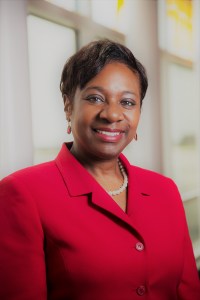
Karen Ellis, Chief Customer Experience Officer 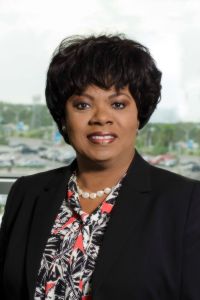
Vernice Walkine, President and Chief Executive Officer
Women in leadership positions in the aviation industry are rare – especially for women of colour. As leaders at your respective airports, do you see the need to foster a culture of diversity?
“I absolutely see a need to foster a culture of diversity – for the exact reason you just stated – leadership positions for women in the aviation industry are rare” Ellis begins. “For decades, it was believed that women were incapable of holding positions or contributing within the aviation industry. Pioneering women have long disproven that misconception – especially as it relates to women pilots. Here in San Antonio, we boast Stinson Municipal Airport, named after Katherine Stinson – one of our nation’s pioneering female pilots. It is now equally important to continue to prove that misconception as it relates to other, non-flight related positions within the industry. This is achieved not by merely fostering a culture of diversity within the aviation industry – but by shining a light upon it! We need to recognize and celebrate the great achievements of women and minorities within our industry, to further make young people aware that these positions and career paths not only exist – but they are available to everyone and anyone and they all have an opportunity to succeed in this profession. One of the best ways to address a disproportionate number of minorities in these roles is to highlight and celebrate the successes of those that hold these key Airport CEO, Director and C-Suite positions – and to continue to educate and encourage future generations to explore the entirety of careers within the aviation industry.”
“Karen you’re absolutely right,” Walkine responds, “I think that companies/agencies have to be intentional about recruiting and encouraging persons in these groups to train and apply and one way to do this is certainly by highlighting and celebrating achievements. The Nassau Airport Development Company was deliberate in its efforts to recruit me, seeking to find a woman of color. When I first joined the company, I was the only female executive on the 5-person executive team. After I was appointed as CEO, 4 of the 5 executives were female. While this is somewhat of an anomaly in airports – well – in our industry as a whole, I’m hopeful that we give younger females of colour hope – as so many yearn for female role models in the industry but have had hard times identifying them – which in turn, causes them to lose hope and interest.”
(By incorporating diversity) We can build inclusive teams whose various background and skill levels can help to drive innovation, lead to enhanced decision making and lead to higher employee engagement.” – Vernice Walkine
What do you consider to be the biggest impediment to breaking down the gender imbalance/race barriers in our industry?
Walkine ponders the question for just a second before beginning her thought, “I think the challenge for the industry is that of perception. As I stated just a moment ago, there is still a perception that aviation is technical/mechanical and therefore not attractive to women. As the industry has evolved to reflect more customer service/experience driven operations with airports, for instance, under professional private sector management, there has been a gradual shift towards more women in key roles – marketing, air service development, commercial operations, passenger experience – but still very few women as CEOs, and even fewer women of colour as CEOs. The reality that women are effective in lead positions and that the industry is exciting and dynamic, i.e. perfect for women who manage change very effectively, must be demonstrated in order to change that perception.”
Ellis follows up immediately thereafter, “I wouldn’t say impediment – rather I would say challenge – and that is communication. I make that distinction because you typically want to remove or eliminate impediments, but we need communication to continue to break down barriers in our industry. As I stated earlier – first – we need to celebrate and highlight the many achievements and successes of minorities in our industry. Shine light on them – and there are many! This communicates that there are no barriers, and no accomplishments that cannot be attained by everyone regardless of race or gender. Then, where we see challenges – we should address them and discuss them with genuine and respectful communication. I like to say that we were given two ears and just one mouth, and an essential part of communication is listening. Listen to other perspectives, opinions, and ideas, understand them – especially as they relate to issues of diversity. Communication leads to understanding, and that can remove all challenges that may be encountered within the aviation industry.”
How does increased diversity, in your opinion, impact the industry and how do you attract and retain those individuals?
Ellis states that, “Increased diversity can only have a positive impact on our industry. By showing the diversity of our industry, and the success that can be achieved by all – regardless of status – proclaims that we are an industry that is open to everyone. It also projects that as a global industry – we reflect our global makeup. We are a direct reflection of the global market that we serve – through our diverse look, language, and attributes. Most importantly – it becomes a welcome sign that will attract the best of the best of our future generations to enter into our industry, as everyone will feel not only welcome to enter our industry – but that they can succeed and achieve their life and career goals.”
Walkine reiterates that point stating, “The aviation industry like all others seeking to increase its diversity, must do so in order to reflect the society/community it serves. Aviation is a critical economic sector globally and must be diverse and inclusive in order to be representative of its community, providing equal opportunities for its people. That diversity makes for an interesting and exciting environment where people of different stripes can unite around common goals and objectives, bring different experiences and ethos to solving problems for good outcomes for the company and to the beneft of everyone…diversity makes for a good image and reputation for the organization, and ultimately the industry, and this is what fosters success and enables sustainability. This makes it so much easier to attract and retain that talent.”
By showing the diversity of our industry, and the success that can be achieved by all, regardless of status, proclaims that we are an industry that is open to everyone. It also projects that as a global industry – we reflect our global makeup. – Karen Ellis
What advice would you give to leaders and others in the industry on how they can begin the conversation at their respective airports?
Walkine asserts that “Leaders must declare the intention to have the organization become more diverse and inclusive and they can do this by creating non-discrimination and inclusion policies, and drafting strategic objectives with specific goals articulated such as number of candidates, gender, race/ethnicity and the immediacy of the exercise must be determined and agreed upon. It is so important that there be no reticence about the declaration of these goals. By doing this, we can build inclusive teams whose various background and skill levels can help to drive innovation, lead to enhanced decision making and lead to higher employee engagement.”
Ellis adds, “First – (leaders must) provide a platform for the conversation! If individuals do not feel they have a platform, or a forum in which they can engage in candid conversations, especially as they relate to diversity and issues of equity without fear of ridicule, dismissiveness, or criticism – the conversation can never even begin. Provide that safe environment for the conversation to get started. Secondly, listen at least as much as you speak. A conversation does not always have a beginning, middle and an end – where there is a definitive finish or answer. Conversations can and should continue. If a safe conversation does nothing more than to provide participants with a different perspective or a better understanding of an issue than when they started – that is success! And that will continue to be built upon through continued dialogue and conversation and understanding. Communication is a process, and the process itself leads to a better workplace, as everyone feels that their voice is being heard.”
While progress has been made, the road ahead is still long and each of us should take an introspective look into our respective organizations and ask the question, are we doing enough? While today is International Women’s Day, it should be noted that these conversations are not confined to a date or a specific period in time. We must continue to look at programs and practices that we can implement to have a more inclusive organization including (but certainly not limited to): mentorship programs, awareness programs, enhanced bias training, partnerships with organisations that represent various minority groups etc. A wise person once said that “Without Diversity, Creativity remains stagnant.” Diversity – and the varying viewpoints and perspectives are key to unlocking further innovations in our industry and could be the difference between us remaining stagnant or taking the next step. #ContinueTheConversation
A special thank you to both Vernice and Karen for taking the time out of their busy schedules to discuss this very important and timely discussion. I’d also like to dedicate this post to Mr. Jermaine Dorsette, a colleague of mine that recently passed away. Forever in our hearts and minds.





 Terminal Talks