
 By
By 
Estimated reading time: 4 minutes
Please be sure to follow us on Facebook, Twitter and LinkedIn for the latest news.
What a difference a year makes. Twelve months ago, we were all pinned to our TVs, learning more and more about a new virus that had originated in Wuhan, China. The US had recently observed it’s first case of COVID-19 (on January 21st, 2020) and while there was definitely some concern, no one could have anticipated just how bad things were about to become.
Since then, we’ve been embroiled in a fierce battle with an invisible opponent that respects no borders, nor does it discriminate against race or gender. Many of us have spent most of our time at home, away from others using Skype and Zoom (ad nauseam) to keep in touch with loved ones. We’ve tried out new recipes, taught our children (or tried to anyways – God Bless Teachers) – and early on, even enjoyed the time at home thinking that sooner rather than later, we’d get back to our normal routines.
Now that we are entering our second year of the pandemic, health officials are concerned about a new invisible enemy, one that threatens to undermine all the hard work completed within the last year. The World Health Organization issued a report labeled “Pandemic Fatigue, Reinvigorating the Public to prevent COVID-19” and in it, the WHO best describes pandemic fatigue as a “demotivation to follow recommended protective behaviours, emerging gradually over time and affected by a number of emotions, experiences and perceptions.” At this stage of the pandemic, this is a natural human response and their report states that generally, this occurs for three main reasons:
Despite the rising number of cases around the world, the longer the pandemic goes on the less persons perceive the virus as a threat. Conversely, the more restrictions put in place by governments to curb the spread of the virus (lockdowns, quarantines etc.) the greater the perceived loss (this loss may take various forms and will specific to an individual but could be financial, social etc.). As the pandemic wears on, people began to question whether the costs (affects to livelihood and quality of life) outweigh the perceived threat (potentially contracting the virus).
Secondly, as mentioned earlier, the measures put in place to curb the spread of the virus have been extremely restrictive (mandatory quarantines, curfews etc.) and daily life has proven difficult with even the most mundane of tasks becoming a source of anxiety. This ranges from having to limit contact with friends and family to having to wait outside of establishments due to them being “at capacity” to enforce social distancing rules. People feel as though they have little control of their daily lives.
Lastly, we’ve all heard the saying, “what is normal for the spider, is chaos for the fly.” At the start of the pandemic, there indeed was quite a bit of chaos. We all gawked at the idea of having to social distance and wear face masks, yet only a few months later, having a mask (or hand sanitizer) has become as natural as having a cell phone or a wallet. The longer you’re exposed to a certain set of events, no matter how outlandish they may be, “normal” becomes relative – which can eventually lead to complacency.
But what does this all mean for airports? Pandemic fatigue (whether by passengers or airport employees) threatens to undermine the measures implemented (such as physical distancing, mandatory use of facial coverings etc.) by the airport to keep the travelling public and airport community safe. While passengers may (knowingly or unknowingly) refuse to engage in these protective measures, airport employees may be less likely to enforce the measures and may turn a blind eye. To combat this, airports must double down on its efforts through a multi-layered approach designed around education, engagement, collaboration and increased communication.
One of the first things we can do is engage the help of mental health professionals. Everyone has been impacted differently by this pandemic and as such, these professionals can help to provide persons with the information they need to get through these uncertain times. Additionally, they can educate team members on the importance of mental health which for years, has held a social stigma. By doing this, it shows staff that you care about their well being which will lead to more engaged employees thus reducing the likelihood of pandemic fatigue.
Additionally, airport leaders should also seek help from employees and other team members when developing or updating COVID-19 response measures. With so many measures being placed on individuals daily (essentially being told what to do without the ability to influence), this small act may lead to greater buy-in as persons are more likely to follow measures that they helped to create and enact.
As it relates to our passengers, we must continue to stress the importance of following the implemented measures while at the airport. This can be achieved through strategic messaging on existing platforms that passengers interact with daily such as the airport website and social media such as Facebook and Twitter. Additionally, signage (both static and digital) will continue to play critical roles in keeping passengers informed.
Lastly, don’t be afraid to find new and creative ways to get your message across. While the message may not have changed, presenting it in a way that people can identify with it will help with reinforcement. A great example of this was a recent announcement of a contest held by the Key West Airport, the Florida Key’s Tourism Council, JetBlue and The Gates Hotel.
The airport had recently received a UV-C cleaning robot and used this opportunity to not only provide additional information to the public, but allowed one lucky winner the opportunity to name the robot. Not only would they get the honour of naming the robot, but they’d also get three nights at the hotel with airfare provided by JetBlue. This is a wonderful example of collaboration and creative thinking as this contest provided a win-win scenario for all partners. The airport was able to reinforce its messaging relative to its COVID-19 protocols, the Tourism board was able to promote the destination while JetBlue was able to promote their inaugural flights into Key West and the Gates Hotel received some positive press during what has been a relatively slow period for tourism.
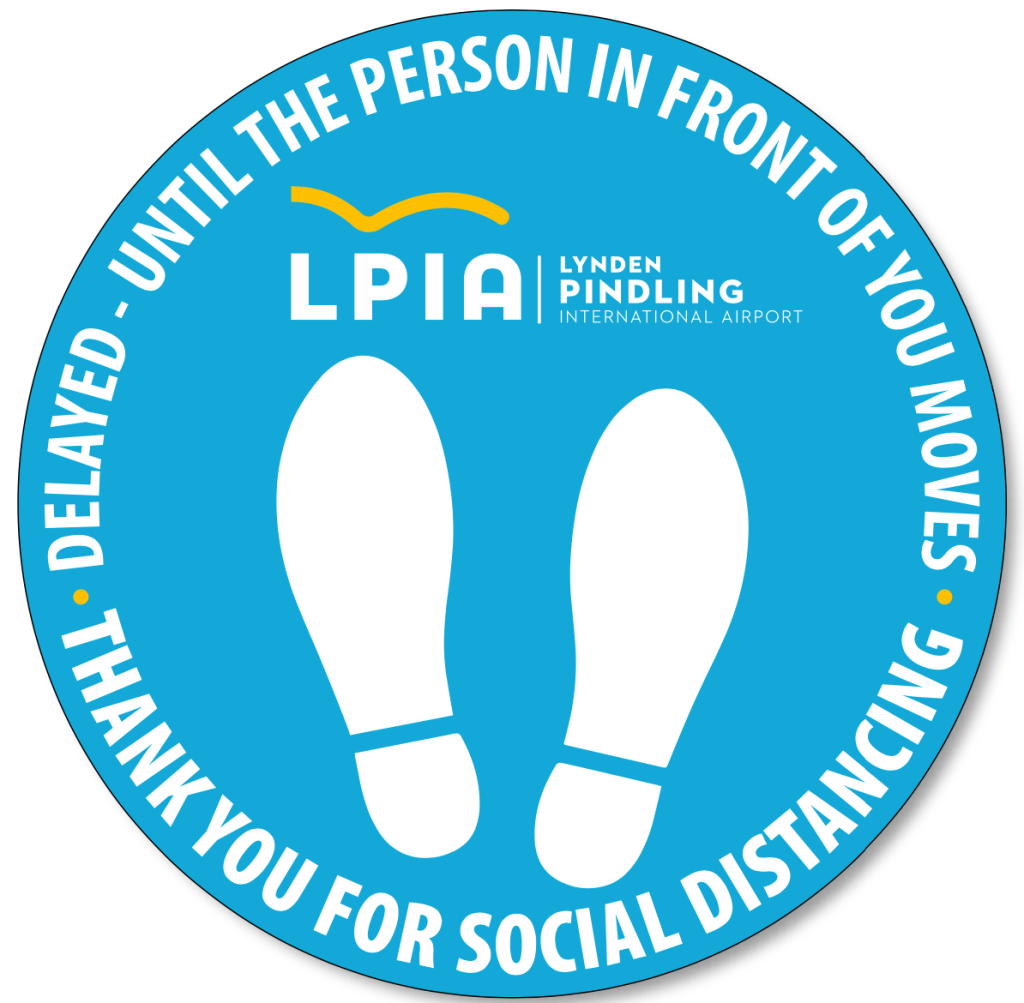
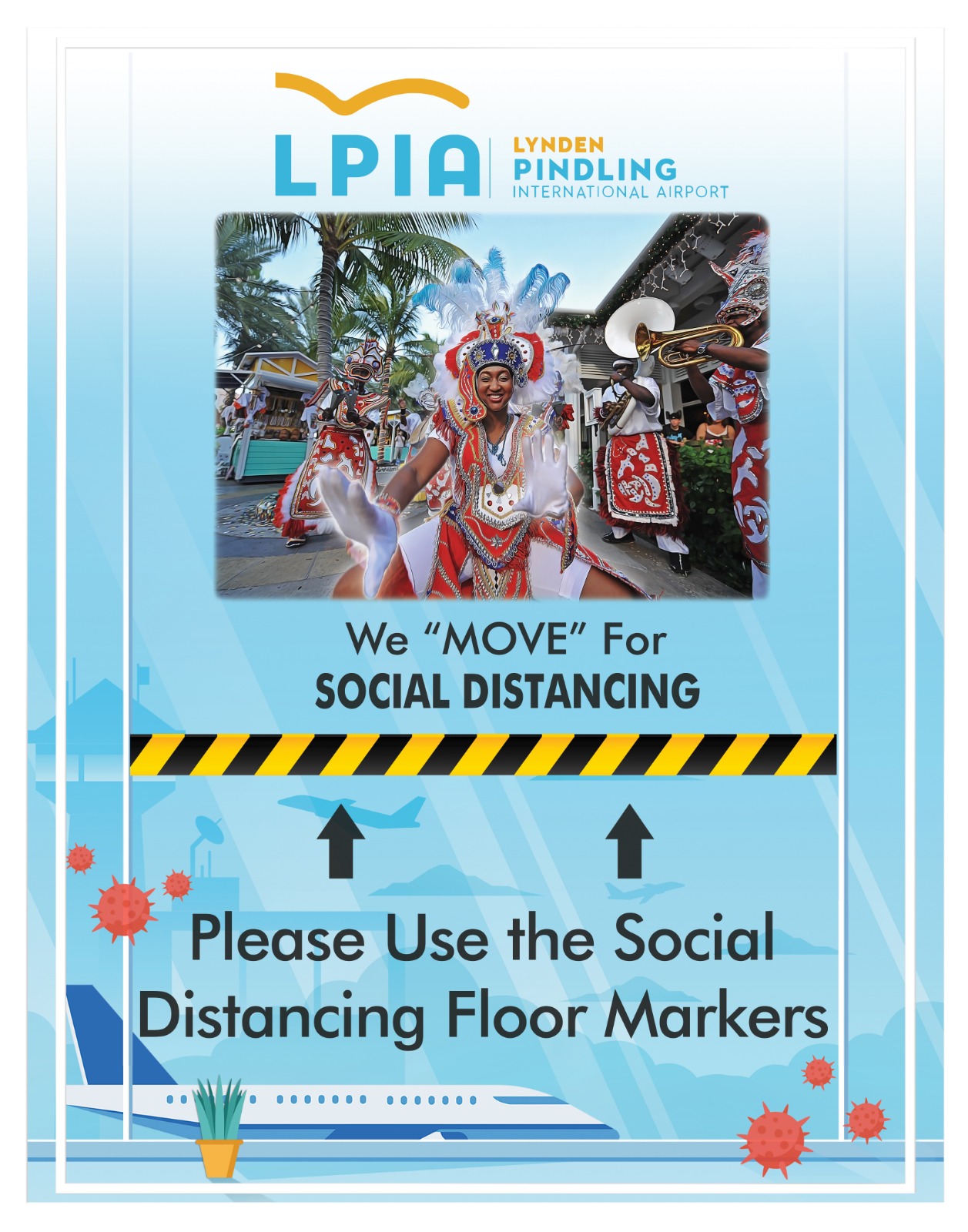
The above floor markers and signage are a fun and creative way to reinforce the airport’s COVID-19 measures while bringing in local culture and developing brand awareness. Source Nassau Airport Development Company.
To say that the COVID-19 pandemic has certainly been a trying time for everyone, would most likely be the understatement of the year. Despite the challenges we’ve faced, there is some light at the end of the tunnel, especially as vaccines continue to be rolled out worldwide. In the interim, we must continue to do all that we can to ensure the safety of the travelling public and the airport community. We’ve come too far to not go further.



 Terminal Talks
2 comments on “Pandemic Fatigue – and the Potential Implications for Airports”