
 By
By 
Estimated Read Time: 5 minutes.
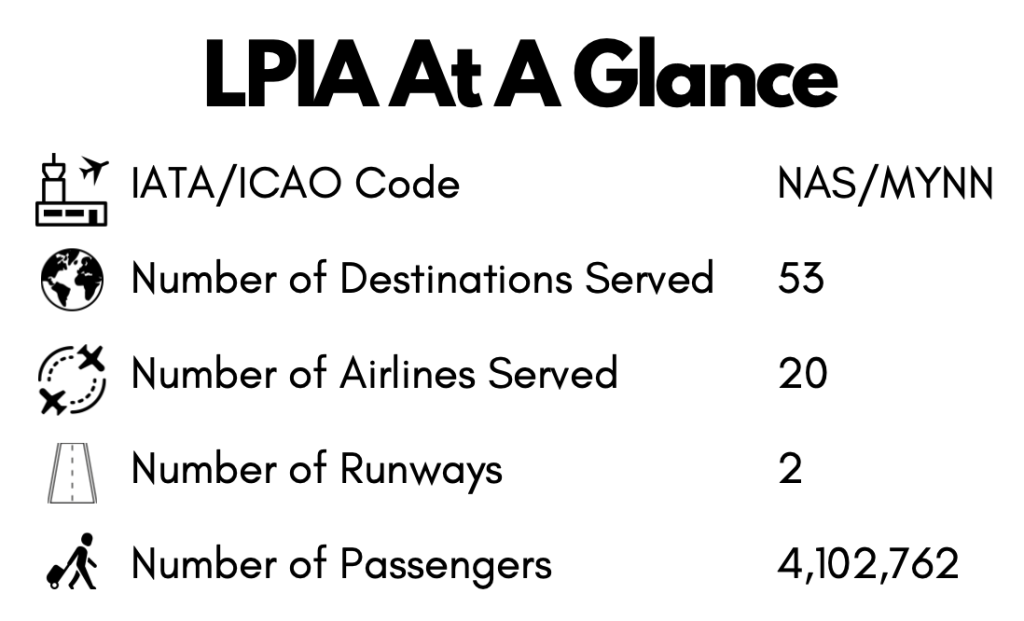
Named after the first Prime Minister (also known as the Father of the Nation after leading the country to Independence in 1973), the Lynden Pindling International Airport (LPIA) is the largest airport in The Bahamas and is the gateway to the more than 700 islands and cays that make up the archipelago. The airport is owned by the Government of The Bahamas and is managed and operated by the Nassau Airport Development Company (NAD). NAD is a Bahamian company, owned by the Bahamian Government and managed by the Vantage Airport Group, a leading investor, developer and manager of airports around the world, and one of the first to be involved in the global trend of airport privatization, investment and management.
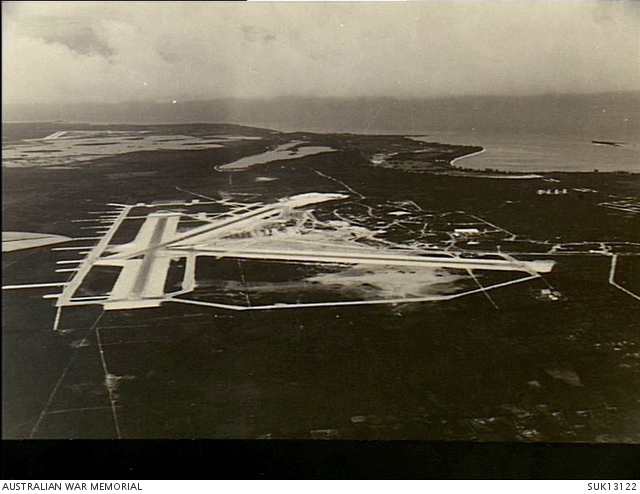
The airport has a long and storied history, being used by the Royal Air Force as a station during the Second World War to train pilots for delivery flights of new bombers. During that time, it was known as Windsor Field (after the Duke of Windsor who moved to Nassau) and was the second airport on the island with other flight operations taking place at Oakes Field (named after Sir Harry Oakes). At the end of World War II, the RAF withdrew from The Bahamas and Windsor Field airport was left vacant as The Government decided that Oakes Field would be utilized for Civilian Operations due to it’s runways and other facilities which were readily adaptable for civilian aviation purposes as well as it’s close proximity to Downtown Nassau.
This arrangement lasted until November 1st, 1957 when civil operations began at Windsor Field (at this time renamed as the Nassau International Airport – NIA). As I understand it, the catalyst for change was due to the introduction of jet aircraft by the airlines that led to aircraft performance issues – the runways at Oakes Field weren’t long enough for flights to depart from as well as other complications. As sad as it was to lose Oakes Field, the airport did end up having a life after its death with the airport being used for The Bahamas’ famed speed week (in the years prior it had used Windsor Field airport as well) where the best drivers in the world descended upon The Bahamas for some fun in the sun. As a boy, my love for aviation would develop at Oakes Field as my father would take me to this very airport to fly model airplanes with a local flying club before the area was fully converted into a drag racing strip, which is still in use today.
In 1974, a treaty was signed between the Bahamian Government and the United States Government allowing for pre-clearance facilities to be setup which allows for passengers to be inspected prior to boarding US Bound flights. Once they arrive into the United States, passengers bypass US Customs and TSA security lines and are able to proceed directly to their destination or onto their connecting flight. With the signing of this agreement, The Bahamas became one of the first countries in the world with pre-clearance facilities. Additionally, with tourism as the number one industry, pre-clearance gave (and continues to give) The Bahamas a competitive edge over other Caribbean markets due to the added convenience it provides to travellers and is why the US represents the largest share of visitors to the island nation each year.
Fast forward 30 some odd years, NIA was in dire need of a transformation as the terminals had reached their capacity. Passengers often complained of lengthy lines and poor customer service – definitely not the image The Bahamas wanted to portray. Thus, NAD was created and working with the Vantage Airport Group, the teams began an ambitious $410 million dollar redevelopment of the airport which was quite the undertaking managing operations and a massive construction project. Nevertheless, the airport was redeveloped on time and under budget with the last of the terminals being opened in 2013.
As the airport is typically the first and last touch point for visitors, NAD & Vantage worked hard to ensure that a local sense of place was incorporated in all facets of the airport redesign. The architectural design team accomplished this through several features that are not only aesthetically pleasing, but also provide functionality such as:
Widespread Use of Glass – With over 300 days of sunshine, the designers wanted to incorporate as much natural light into the building as possible not only allowing visitors to experience the warm Bahamian sunshine, but that would also allow the airport to greatly reduce its energy costs. The glass is also extremely strong and is rated to withstand up to 150 mph winds to help protect against hurricanes.
Roof Undulations – Not only do the undulating roofs mimic the ocean waves but they also allow the airport to collect and reuse rain water and provide a covered walkway helping passengers to stay cool on the hot summer days as well as protecting them from the inclement weather while transiting terminals.
The design features continue inside the terminal, with the carpet color mimicking the varying hues of Bahamian waters. No detail was too small and this is evidenced by the specks of conch shell broken up and placed in the tile in various parts of the airport.
This local sense of place continues with an incredible collection of artwork. Each unique piece was curated by local artists and in total, there are over 13 pieces, all displaying different facets of Bahamian history and/or culture. In addition to these pieces, NAD has partnered with Dongalik studios, a local art gallery, who provides the airport with local artwork and products exposing visitors to Bahamian artists and entrepreneurs while leaving Bahamians proud of what the small country of almost 400,000 has to offer the world.
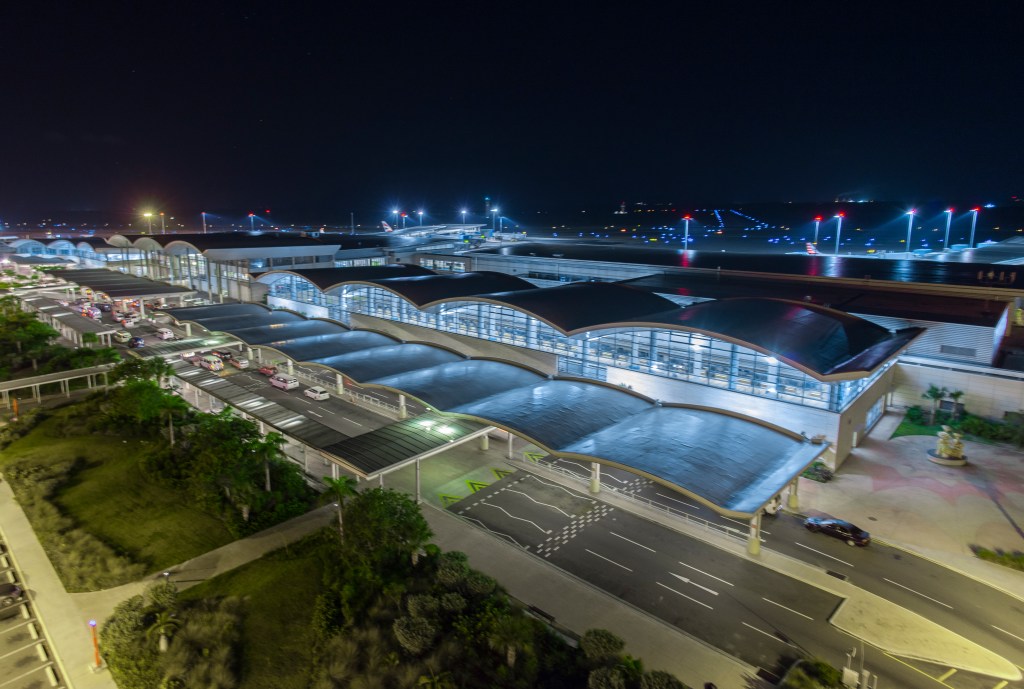
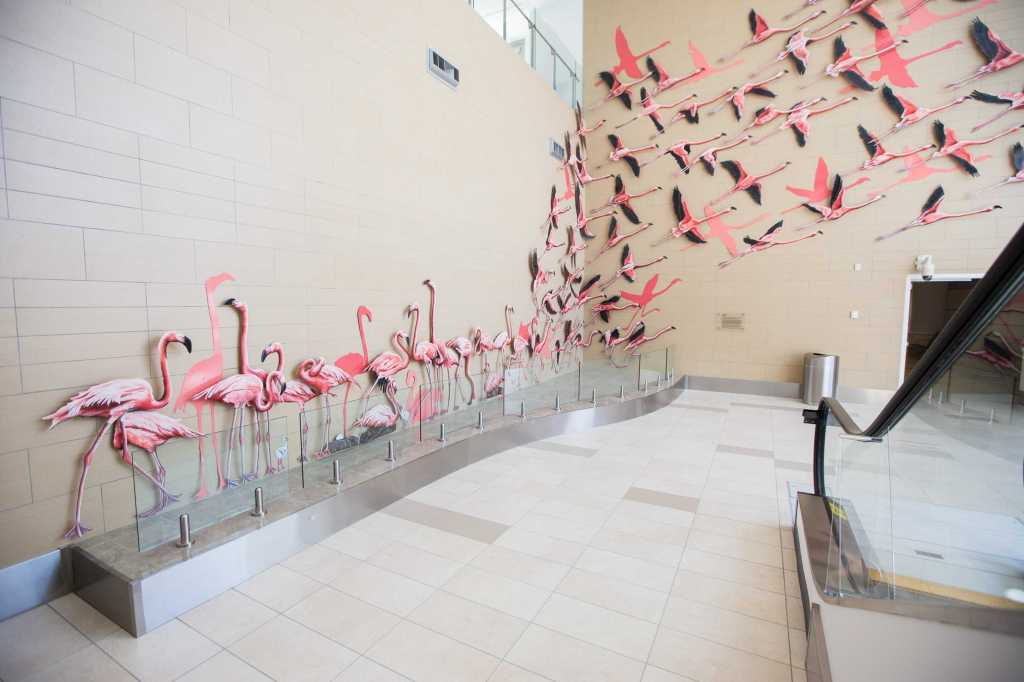

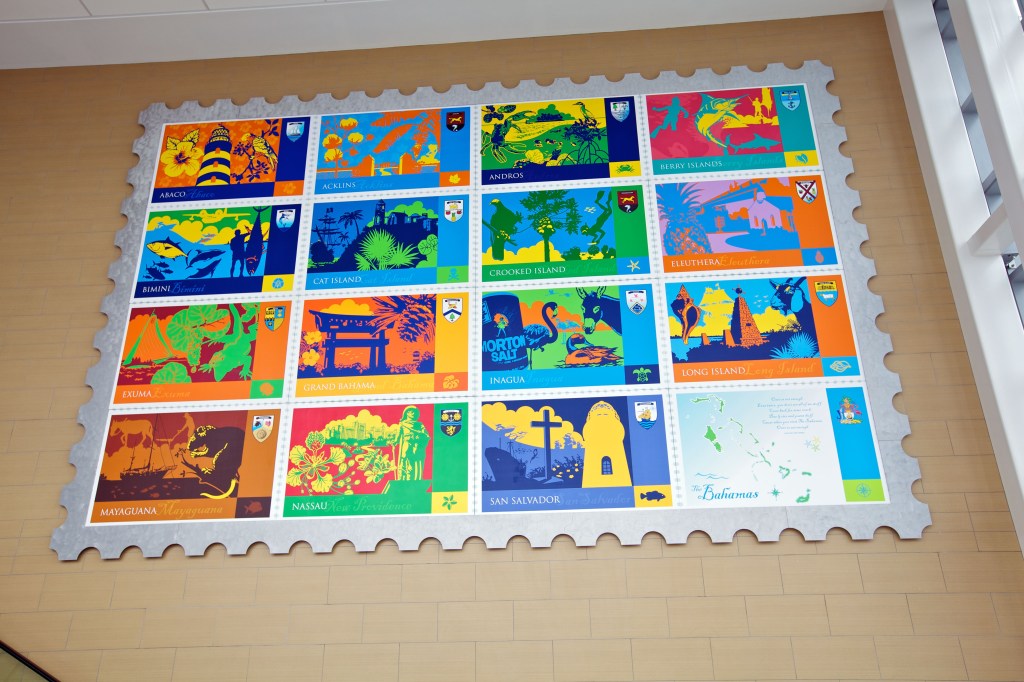
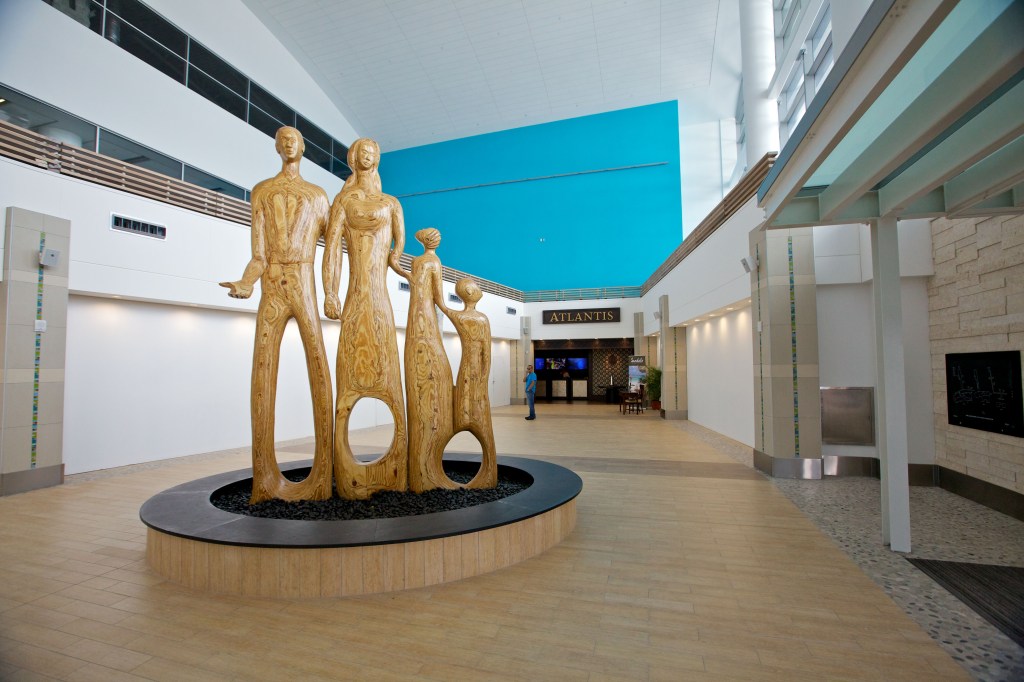
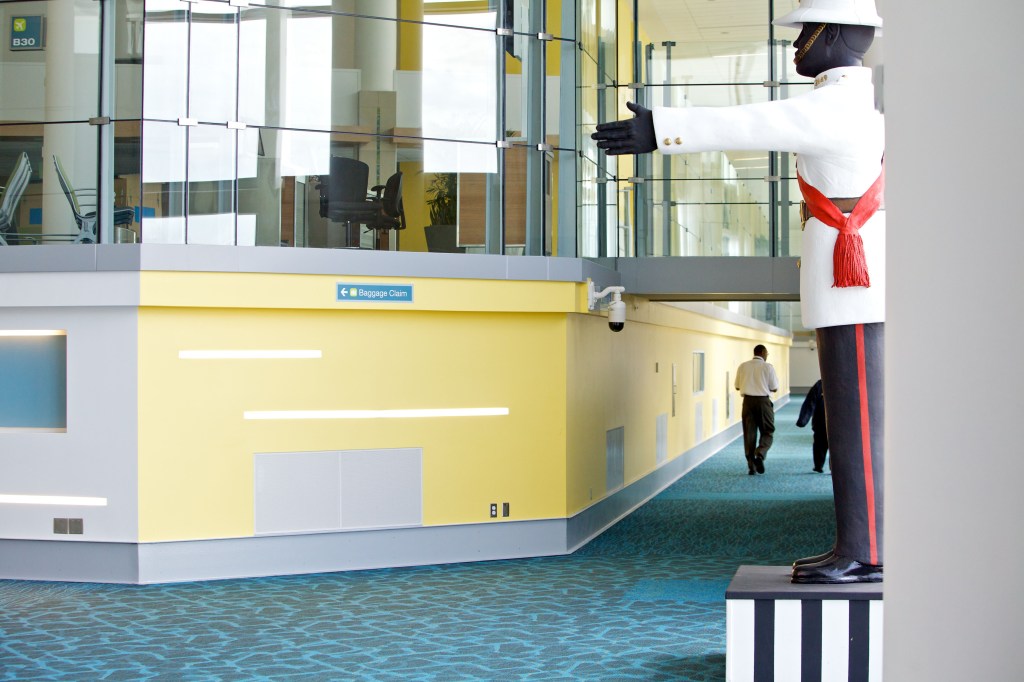
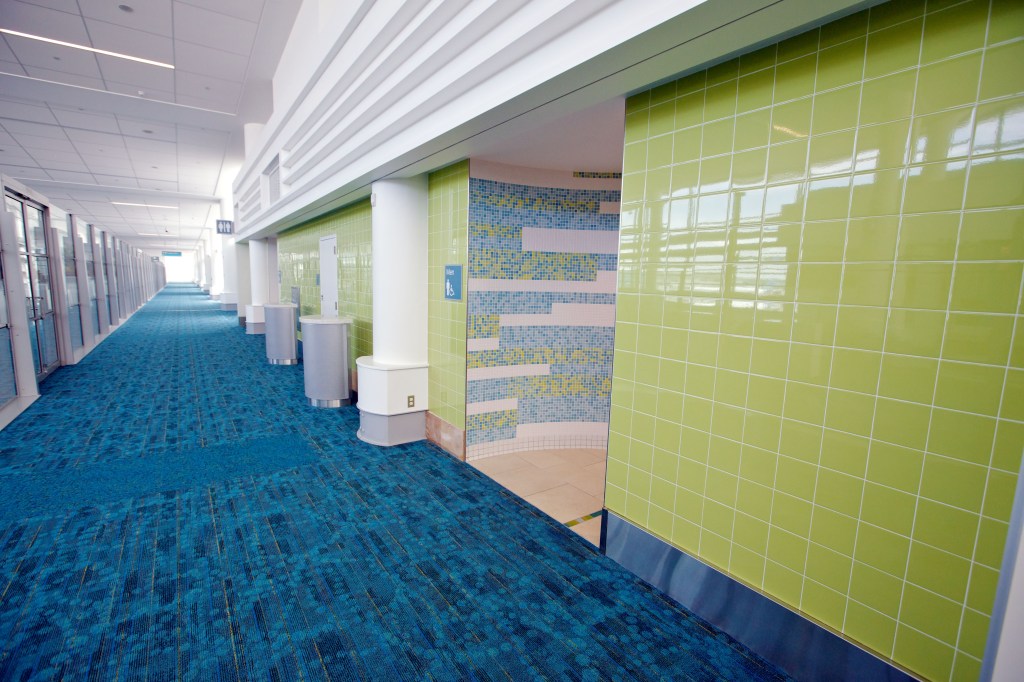
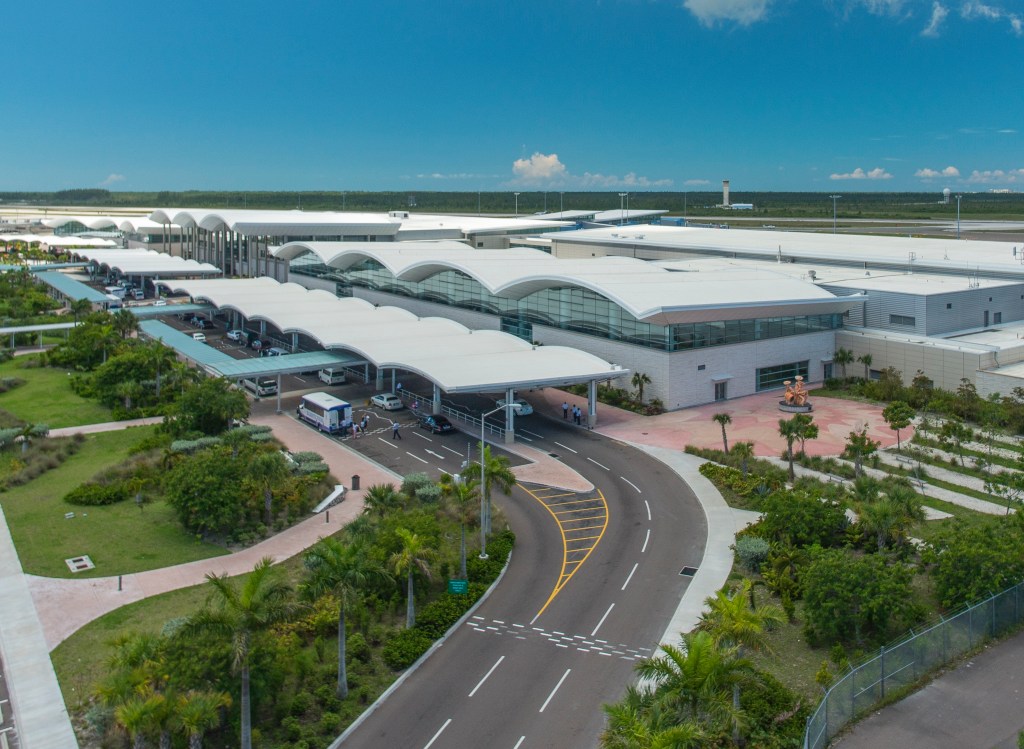
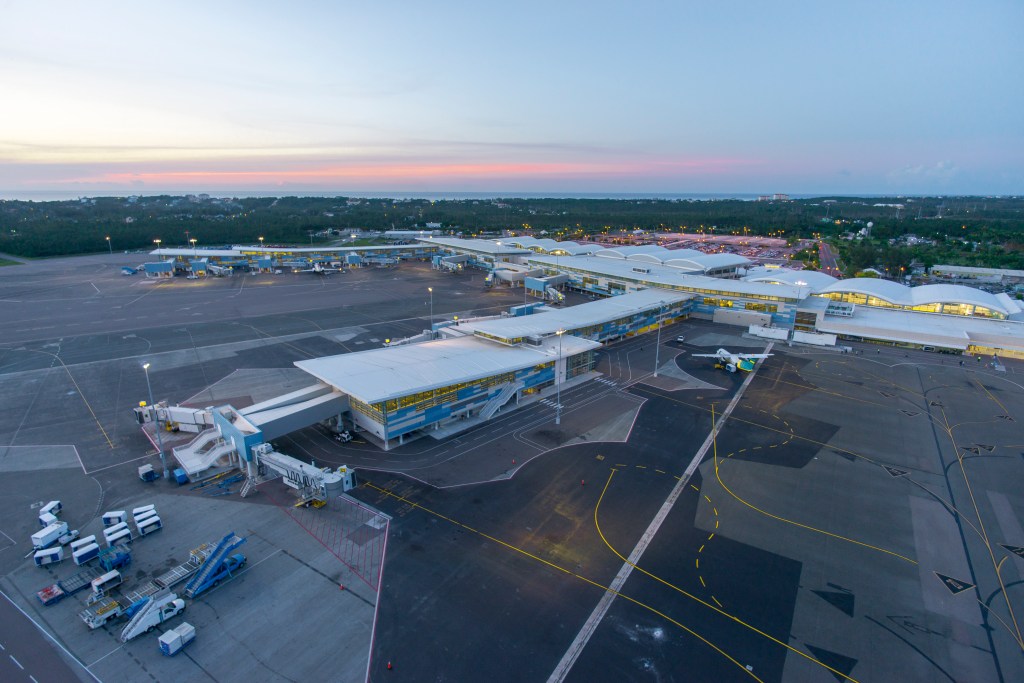
Images provided courtesy of the Nassau Airport Development Company.
In addition to the artwork, airport users will hear the rhythmic sounds of Junkanoo or Rake ‘n’ Scrape music over NAD radio, a station dedicated to the airport, dedicated solely to Bahamian artists. Additionally on arrival, a live band plays for all arriving passengers and it isn’t uncommon for visitors to meet a pirate threatening them to “walk the plank”. Concessionaires and eateries were also carefully chosen, allowing visitors to have a taste of The Bahamas, even if they never leave the airport.
Like all airports (especially in the Latin America and Caribbean region where tourism plays a major role), LPIA was hit hard by the COVID-19 pandemic but that hasn’t stopped the airport from working hard to restore passenger confidence. The airport has worked hand in hand with its airport, tourism and governmental partners to implement a cadre of measures all designed to keep the travelling public and airport community safe. Additionally, the airport also underwent the Airport Council International’s Health Accreditation process and received the distinction in September 2020. This proved to the world that the airport’s measures align with the ACI’s Business Restart and Recovery Guidelines and the International Civil Aviation Organization’s (ICAO) Aviation Restart Task Force recommendations along with industry best practices. Additionally, to comply with the recent mandates put in place by the US Government, the airport has also worked with a local laboratory to offer Rapid Antigen Testing on a trial basis. For a complete list of measures the airport has taken to keep the airport community and travelling public safe, please click here.
Despite the setbacks, the airport and its partners have continued to work hard, utilizing the down time to conduct/complete several notable projects, such as the installation of a 4th arrivals carousel which allows for more social distancing in the near term and will provide greater capacity (once demand returns) in the long term. Additionally, US Customs and Border Patrol recently phased in Biometric processing for all passengers departing to the US. These initiatives position the airport for success, allowing for faster processing, and safeguarding the airport against future pandemics.
With its world class facilities and amenities, LPIA is ready to welcome passengers and to provide them with an unrivalled traveling experience, promising to show all airport users why it’s truly “Better In The Bahamas.”



 Terminal Talks
The airport has changed to be a real mordern efficient place that looks inviting for visitors. It is just a pity that I will not see it again. I left there in 2001 and hoped to return.
LikeLike